
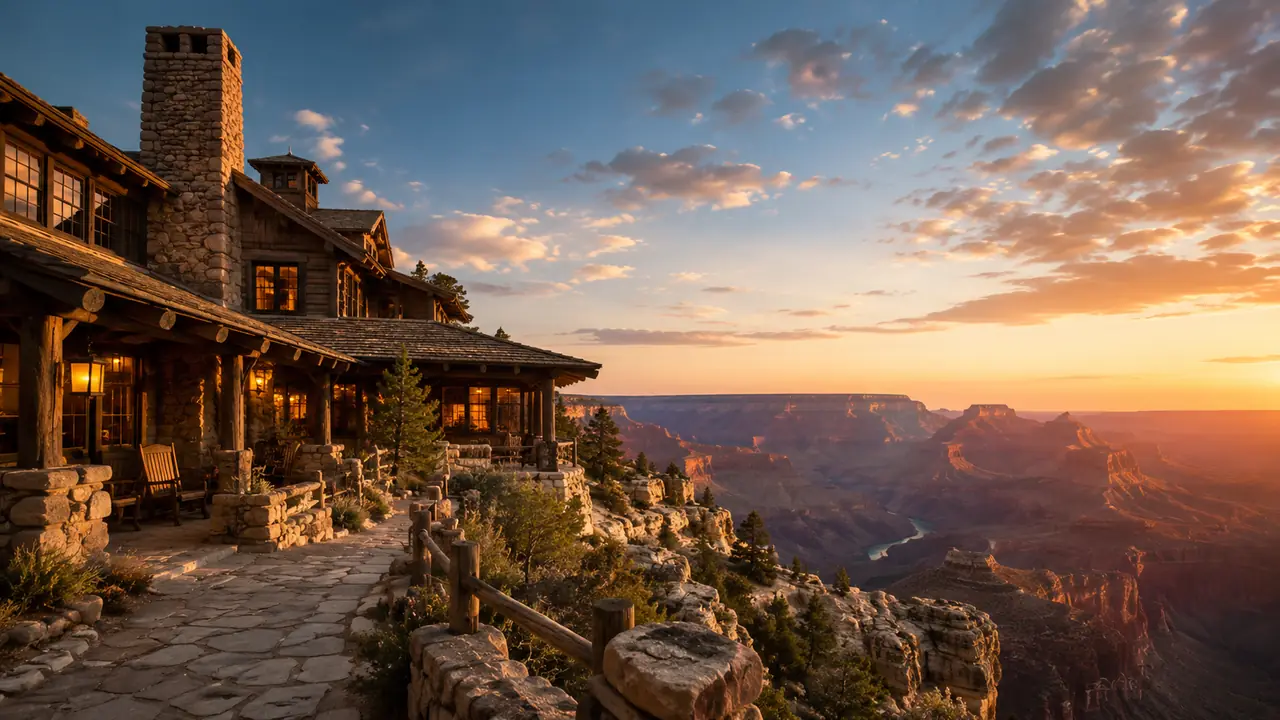
Choosing a rim
South Rim vs North Rim: Which One, and Where to Stay
These are not two versions of the same visit. The South Rim and the North Rim are roughly four to five hours apart by road, they run on different seasons, and they have very different lodging situations. For a first visit, and for almost any trip with limited time, the answer is the South Rim.
The practical differences
| Factor | South Rim | North Rim |
|---|---|---|
| Season | Generally open year round | Seasonal, with a limited operating window |
| Share of visitors | The large majority | A small fraction |
| Lodging supply | In-park lodges plus Tusayan, Valle and Williams | Very limited, with gateway towns some distance away |
| Nearest gateways | Tusayan, 2 miles | Jacob Lake, Fredonia and Kanab, Utah |
| Getting there | Straightforward from Flagstaff, Phoenix or Las Vegas | A long drive from anywhere, via northern Arizona or southern Utah |
| Character | Busier, more services, more viewpoints | Quieter, higher, more forested |
The distance between them is the point that catches people out. They face each other across the canyon but the drive around is roughly four to five hours. Visiting both is a multi-day plan, not a day trip.
Why this guide focuses on the South Rim
Because that is where the lodging decision actually is. The South Rim has in-park lodges, a gateway town two miles from the entrance, a glamping cluster half an hour out and a Route 66 town with twenty-two properties. There are real choices to help with.
The North Rim's lodging situation is both smaller and more changeable, and covering it responsibly requires current information rather than last season's. We would rather point you to the authoritative source than publish something that may be out of date by the time you read it.
If you are considering the North Rim
Check the National Park Service alerts and conditions page before making any plans. Operating dates, road access and lodging availability there have been subject to significant change, and that page is the authority on all three.
The general shape of the decision: if the North Rim is open for your dates and you want a quieter, higher, more forested experience, and you have the days to absorb the driving, it is a rewarding trip. If you have limited time, or this is a first visit, or you are combining the canyon with Sedona, Route 66 or Phoenix, the South Rim is the right answer.
What about Grand Canyon West?
A third and separate thing. Grand Canyon West is on Hualapai tribal land and is not part of Grand Canyon National Park. It has its own entrance, its own ticketing and its own lodging arrangements, and it is closer to Las Vegas than to the South Rim.
It is worth knowing this before you book, because a hotel described as being near the Grand Canyon in that area is near a different place from the one most visitors mean.
Review scores, amenities and rates change. Everything on this page was checked in August 2026; confirm current details with the property before you book.
Some links on this page go to Booking.com and are affiliate links. If you book through one we may earn a commission at no extra cost to you. It does not change which properties we include or what we say about them. See our affiliate disclosure.
The next decision
 Where to stay at the South RimFour realistic bases for the South Rim, ordered by how far you will drive.Open
 South Rim hotelsSouth Rim hotels, from inside the park to the gateway towns, with the distances that separate them. Which properties are genuinely at the rim.Open
 Current lodging statusWhat changes season to season at the Grand Canyon, which official sources to check, and how current conditions should affect where you book.Open
Questions
Is the South Rim or North Rim better?
The South Rim for a first visit, limited time, or a trip combined with other Arizona destinations. The North Rim for a quieter experience if it is open for your dates and you have the days to spare.
How far apart are the South Rim and North Rim?
Roughly four to five hours by road, despite facing each other across the canyon. Visiting both requires a multi-day plan.
Is the North Rim open all year?
No. It operates seasonally. Check the National Park Service alerts page for the current operating dates and any access restrictions.
Is Grand Canyon West part of the national park?
No. Grand Canyon West is on Hualapai tribal land, with separate access and ticketing, and it is a considerable distance from the South Rim.