
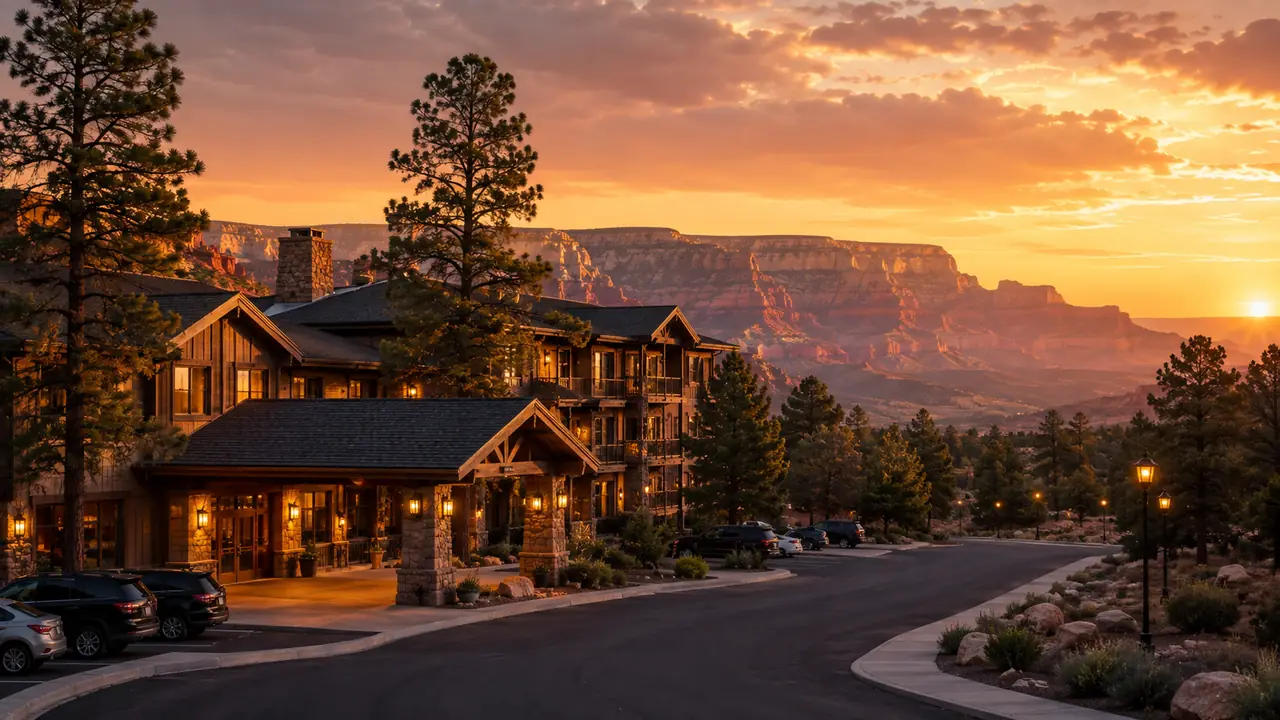
Named formations
The Grand Canyon Pyramids: What They Actually Are
There are pyramids in the Grand Canyon, and they are rock. Dozens of buttes and spires inside the canyon carry formal names drawn from Egyptian, Hindu and Buddhist mythology, given by nineteenth-century surveyors, and several are visible from South Rim viewpoints. A separate and much-repeated story claims an Egyptian citadel was found inside the canyon. Those are two different subjects and this page keeps them apart.
The formations, and where the names came from
The naming convention dates to the 1880s. Clarence Dutton, a geologist working on the early surveys of the canyon, named its interior features after figures from Egyptian, Hindu, Buddhist and Norse mythology, and later surveyors continued the scheme. The intent was descriptive grandeur, not a claim about who built anything.
Names you will come across include Cheops Pyramid, Isis Temple, Osiris Temple, Shiva Temple, Brahma Temple, Zoroaster Temple, Vishnu Temple and Wotans Throne. Cheops Pyramid is the one that most obviously earns the word: a four-sided formation with a broadly pyramidal profile, standing below the rim near Grand Canyon Village.
These are erosional remnants. The canyon's layers weathered back at different rates, and what survives are isolated blocks of harder rock left standing while everything around them was carried away. That is the entire mechanism.
Seeing them from the South Rim
Most of the named formations sit below and out from the rim, so you look across at them rather than up. The practical consequence is that light matters more than distance: mid-day sun flattens them into the canyon wall, while early and late light separates them from the background.
Along the Grand Canyon Village rim and the viewpoints west of it, Cheops Pyramid, Isis Temple and the Shiva and Brahma formations are the prominent ones.
Toward the eastern end of the South Rim, around the Desert View stretch, Vishnu Temple is the dominant feature.
The National Park Service publishes current viewpoint access and which sections of rim road are open or shuttle-only. Check park conditions before planning a route around a specific viewpoint, because access changes by season.
The Egyptian discovery story
The claim that an Egyptian or Tibetan citadel was discovered inside the Grand Canyon traces to a single unsigned newspaper article published in the Arizona Gazette in April 1909. It described an enormous underground complex containing Egyptian artifacts, and credited the find to explorers working under the Smithsonian Institution.
No archaeological record supports it. The Smithsonian, which the article named, has stated it has no record of the discovery or of the men credited with it. No such site has been identified in the canyon since, and the article itself has no byline and no follow-up in the paper.
The story keeps circulating because the formations really are named after Egyptian gods, which makes the two things look connected. They are not. Dutton chose the names in the 1880s, more than twenty years before the article, and for reasons he wrote down.
We include this because people searching for Grand Canyon pyramids are usually meeting both versions at once and would rather know which is which.
What this means for planning a visit
If the named formations are what you came for, two things follow.
You want the South Rim, and specifically the viewpoints along and either side of Grand Canyon Village, plus the eastern stretch toward Desert View.
You want to be at the rim early or late, which is a lodging question rather than a sightseeing one. From inside the park a viewpoint is a walk or a shuttle ride. From Tusayan it is about fifteen minutes to the village. From Williams it is over an hour, which in practice means you will see the canyon in the middle of the day, when these formations show least.
That is the whole argument for staying close, and it applies far beyond this particular subject. Our where to stay guide works through it.
Review scores, amenities and rates change. Everything on this page was checked in August 2026; confirm current details with the property before you book.
Some links on this page go to Booking.com and are affiliate links. If you book through one we may earn a commission at no extra cost to you. It does not change which properties we include or what we say about them. See our affiliate disclosure.
The next decision
 Where to stayFour realistic bases for the South Rim, ordered by how far you will drive.Open
 Grand Canyon VillageGrand Canyon Village is the only lodging inside the park on the South Rim. How the lodges differ, how they are booked and when to stay outside instead.Open
 All planning guidesPlanning guides that change where you should stay.Open
Questions
Are there real pyramids in the Grand Canyon?
There are natural rock formations named after pyramids and temples, including Cheops Pyramid, Isis Temple and Vishnu Temple. They are erosional remnants, not built structures.
Why do Grand Canyon formations have Egyptian names?
The geologist Clarence Dutton named them in the 1880s using figures from Egyptian, Hindu and Buddhist mythology, and later surveyors continued the convention. The names describe scale and shape and say nothing about who or what made them.
Was an Egyptian city found in the Grand Canyon?
No. The claim comes from an unsigned Arizona Gazette article of April 1909. No archaeological record supports it, and the Smithsonian has stated it has no record of the discovery or the people credited with it.
Where can you see Cheops Pyramid?
It sits below the rim near Grand Canyon Village and is visible from viewpoints along that stretch. Early or late light separates it from the canyon wall far better than mid-day sun.